


Figure 1.
Télécharger l'image originale
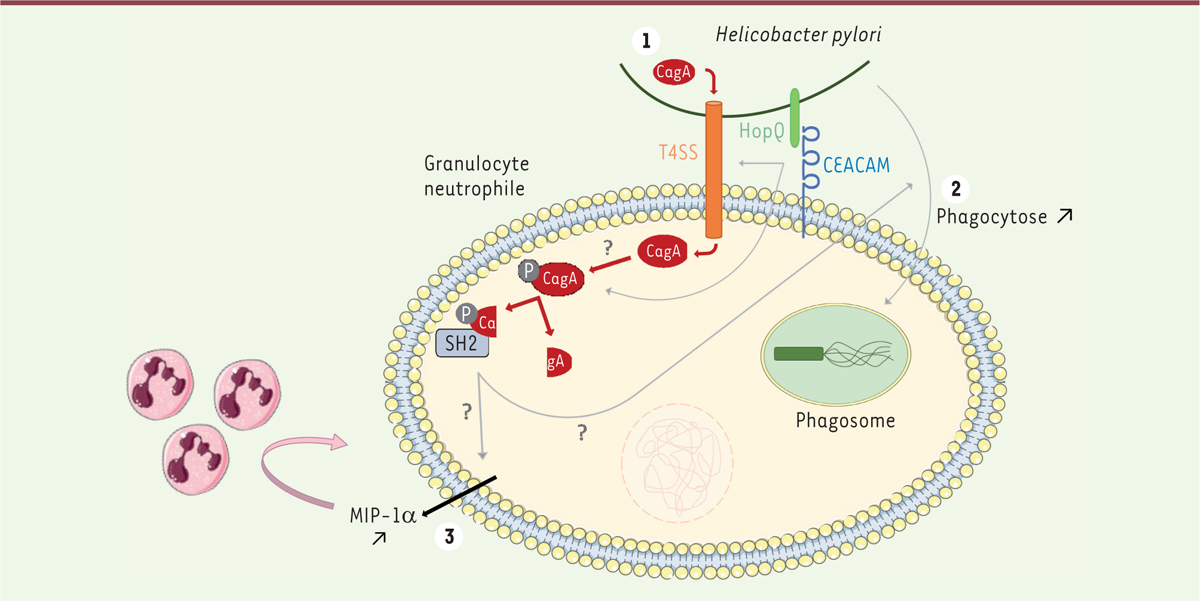
L’interaction HopQ-CEACAM entre H. pylori et le granulocyte neutrophile favorise la translocation de la protéine bactérienne CagA dans le granulocyte via le système de sécrétion bactérien T4SS (1). Une fois transloquée, CagA est phosphorylée puis clivée, et interagit avec des protéines à domaine SH2. Celles-ci modifient la signalisation cellulaire, une modification pouvant être responsable de l’augmentation de la phagocytose de la bactérie (2) et de l’augmentation de la sécrétion de la chimiokine MIP-1α (3), dont le rôle est de recruter d’autres granulocytes neutrophiles.
Current usage metrics show cumulative count of Article Views (full-text article views including HTML views, PDF and ePub downloads, according to the available data) and Abstracts Views on Vision4Press platform.
Data correspond to usage on the plateform after 2015. The current usage metrics is available 48-96 hours after online publication and is updated daily on week days.
Initial download of the metrics may take a while.